Musk Takes Stand as Trial Over OpenAI's Future Opens in Oakland
Elon Musk testified that OpenAI's leaders are "looting" a charity as his lawsuit against Sam Altman went to trial, with lawyers for both sides trading sharply opposed accounts of the company's origins.
By Mei Ling ·
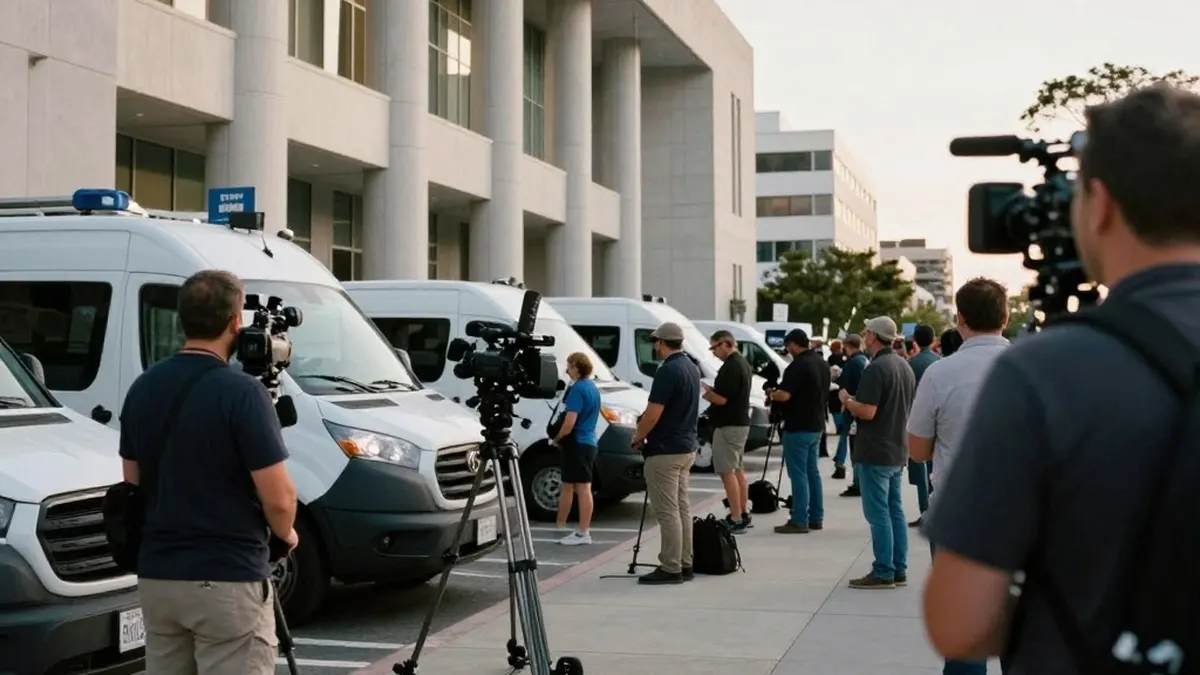
Elon Musk brought his dispute with Sam Altman from social media into a federal courtroom in Oakland on Tuesday, as the trial in his lawsuit against the OpenAI chief executive got under way. The outcome could shape the future structure of OpenAI.
Musk alleges that Altman broke promises made when the company was founded, leading to a restructuring that played down its nonprofit character in favor of a for-profit model. He contends the change cheated him out of enormous profits. "It is not OK to steal a charity," Musk said during his testimony.
Musk's attorney, Steven Molo, opened by presenting his client as a generous entrepreneur committed to improving society through technology. "Without Elon Musk, there would be no OpenAI — pure and simple," Molo said. He noted that when Musk, Altman and others started the company in 2015, its stated aim was to "benefit humanity as a whole unconstrained by a need to generate financial return." According to Molo, it was not meant as a way to get rich, and the founders wanted the technology to be open.
Molo argued that the turning point came in 2022, when OpenAI accepted a second round of investment from Microsoft. From then on, he said, it was no longer working for humanity as a whole but was "a for-profit, operating for the good of the defendants." Those defendants include Altman, OpenAI President Greg Brockman and Microsoft.
OpenAI's lawyer, William Savitt, countered with a longer and more intricate opening. He called the suit petty, motivated by revenge and "a pageant of hypocrisy." "We're here because Mr. Musk didn't get his way at OpenAI," Savitt told the court. He said Musk raised no complaints about the company's structure until after launching the rival firm xAI in 2023, and that he intends to argue the case was filed after the three-year statute of limitations expired.
Savitt also said the best structure for the organization had never been clear to its founders, and that Musk himself had initially backed making OpenAI a for-profit company. A nonprofit made some sense because of the project's social component, he said, but success required top talent and vast computing power, which cost a great deal of money. He described Musk as angry, controlling and competitive, and said the other founders refused to let him take over in 2017 partly because he did not understand artificial intelligence well. Musk, Savitt said, "literally grabbed his stuff and stormed out of the discussions."
Musk was the first witness, taking the stand Tuesday afternoon. Much of his testimony stressed his central role in building OpenAI through donations, time and personal connections. He said the idea arose after Google cofounder Larry Page called him a "speciesist" in a late-night debate over whether it would be "fine" for AI to wipe out humanity. He also said he was key to recruiting cofounder Ilya Sutskever from Google, which took five days and left Page vowing never to speak to him again. Musk said he used relationships with Nvidia's Jensen Huang and Microsoft CEO Satya Nadella to help the company, adding, "Every time I see Satya, he reminds me the only reason he's in this thing is because of me."
Altman, by contrast, was not well known in tech circles when OpenAI was founded, Musk testified. He said the two agreed on the need for a trustworthy organization to oversee safe AI development, and that he worried about leaving superintelligence to Google, which he felt did not take the risks seriously enough. Altman and Brockman, he said, are now "looting" a charity, a step he argued could threaten the future of philanthropy in the United States permanently.
Molo's presentation was repeatedly interrupted by a faulty microphone, though he remained calm and friendly. "What can I say," the judge quipped after another failure. "We're funded by the federal government."
The case could determine the operating structure of OpenAI, which is widely expected to go public this year at a valuation of up to $1 trillion. The trial is scheduled to run until mid-May. OpenAI's lawyers will need to untangle the organization's complicated history to argue that Musk left of his own accord, in what Savitt called a case of "sour grapes."
Source: The San Francisco Standard